

Are you having trouble picking the right lighting for your space? Lighting can change a room’s feel from cozy to cold. It’s a big choice.
Choosing the right lighting is key. Downlighting and uplighting are two main methods. Each has its own purpose and effect.
This guide will cover downlighting and uplighting. We’ll look at their uses and benefits. By the end, you’ll know which one is best for your space. Whether it’s your home or business, we’ve got you covered.
Key Takeaways
- Understand the definitions and differences between downlighting and uplighting.
- Learn the applications of each lighting technique.
- Discover the benefits of using downlighting and uplighting.
- Find out how to choose the right lighting for your space.
- Explore tips for implementing downlighting and uplighting effectively.
The Fundamentals of Interior Lighting
Understanding interior lighting basics is key to a welcoming space. It shapes how we see a room, affecting its feel and use.
The Science of Light Distribution
Light distribution is vital in interior lighting. It shows how light moves through a space. Good light distribution makes a room look better, while bad can cause ugly shadows and bright spots.
The science behind it is about how different lighting styles, like downlighting and uplighting, change how we see a room.
How Lighting Shapes Perception of Space
Lighting changes how we see a room’s size and feel. For example, uplighting can make ceilings seem higher, making a room feel bigger. Downlighting, on the other hand, can make a space feel cozier by focusing light.
By choosing and placing lights wisely, homeowners can change how their space feels. They can make it seem bigger, more intimate, or welcoming.
What is Downlighting?
Downlighting means placing lights above to shine down and light up the area below. It’s great for both work and general lighting, fitting many places.
Definition and Basic Principles
Downlighting makes spaces bright and inviting by shining light down. It’s used everywhere, from homes to offices. The idea is to put lights above to light up the area below.
Types of Downlighting Fixtures
There are many downlighting fixtures, each with its own use. Here are a few:
- Recessed Can Lights: These fit into the ceiling, giving a simple look.
- Track Lighting: This is flexible, letting you change the light’s direction and focus.
- Pendant Downlights: Hanging from the ceiling, they add style and focused light.
Recessed Can Lights
Recessed can lights are loved for blending into the ceiling. They offer clean, unobtrusive lighting.
Track Lighting
Track lighting is flexible and can be adjusted. It’s perfect for areas needing specific lighting.
Pendant Downlights
Pendant downlights light up and decorate. They enhance a room’s look.
Light Distribution Patterns
The way light spreads from downlighting fixtures changes a space’s feel and use. Each type has its own beam angle and spread, affecting the light’s reach.
| Fixture Type | Beam Angle | Light Distribution |
|---|---|---|
| Recessed Can Lights | Narrow to Wide | Focused to General |
| Track Lighting | Adjustable | Directed |
| Pendant Downlights | Variable | Focused |

“The right lighting can make or break the ambiance of a room. Downlighting, with its various fixtures and distribution patterns, offers a versatile solution for creating the desired atmosphere.”
What is Uplighting?
Uplighting is a lighting method that highlights architectural features and creates a captivating atmosphere. It involves placing lighting fixtures at or near ground level. This casts light upward, adding depth and character to a room.
Definition and Basic Principles
Uplighting means placing light sources to direct light upwards. It’s used to accentuate architectural elements or create ambiance. This technique is key in interior design, changing how a space is perceived.
Types of Uplighting Fixtures
There are many types of uplighting fixtures, each with its own purpose. These include:
Wall Sconces
Wall sconces are mounted on walls and direct light upwards. They create a warm glow and highlight the wall’s texture.
Floor Uplights
Floor uplights are placed on the floor and direct light upwards. They illuminate walls, plants, or architectural features, adding drama to a room.
Cove Lighting
Cove lighting involves installing fixtures in recessed areas, like where the wall meets the ceiling. It creates a soft, ambient glow.
| Fixture Type | Purpose | Typical Placement |
|---|---|---|
| Wall Sconces | Accentuate wall texture, create ambiance | Mounted on walls |
| Floor Uplights | Dramatic effect, highlight features | Placed on the floor |
| Cove Lighting | Create ambient glow | Installed in recessed areas near ceiling |
Light Distribution Patterns
The light distribution pattern of uplighting fixtures varies. This affects how light spreads in a space. Knowing these patterns is key to achieving the right lighting effect.
Downlighting vs Uplighting: Direct Comparison
Understanding the difference between downlighting and uplighting is key for the right ambiance. Each method has its own use and look, fitting various spaces and styles.
Illumination Direction and Coverage
Downlighting shines light down from the ceiling, making pools of light. Uplighting, from lamps on the floor or table, lights up ceilings and walls. This creates a sense of height and openness.
Downlighting works well for tasks like cooking or reading. Uplighting adds ambiance or highlights features.
Shadow Creation and Management
Light direction shapes shadows. Downlighting makes sharp shadows, adding drama or texture. Uplighting softens shadows on ceilings, making the space feel more relaxed.
“The interplay of light and shadow can transform a space, making it more engaging and dynamic.”
Visual Impact on Room Dimensions
Choosing between downlighting and uplighting affects room size perception. Downlighting makes ceilings seem higher. Uplighting makes them seem lower. This knowledge helps in lighting design to change room size perception.
By comparing downlighting and uplighting, we can see how to use them for our lighting goals.
Psychological Effects of Lighting Direction
The way light is directed in a space can deeply affect our mental health. Lighting direction changes how we feel in a room, not just how it looks.
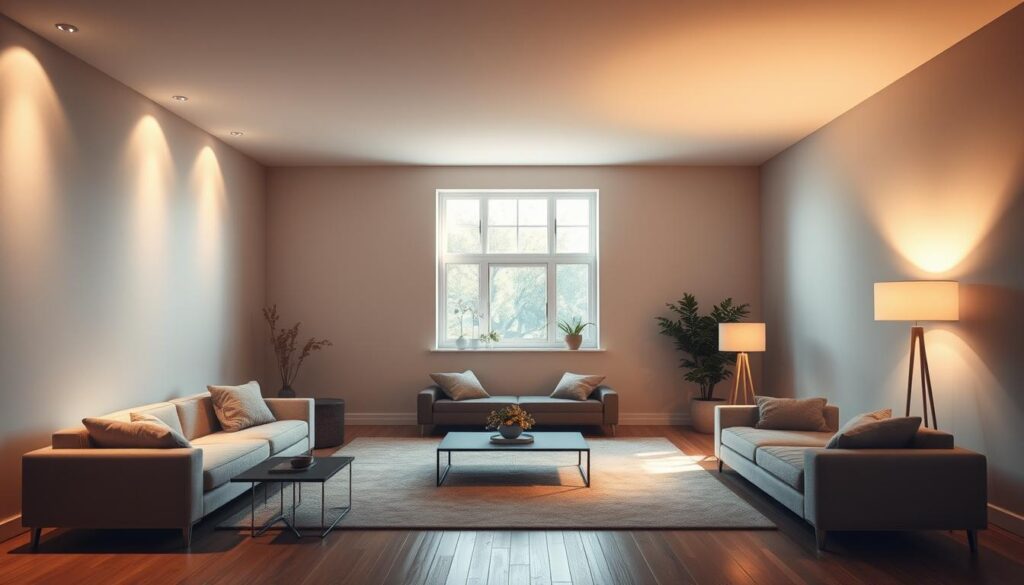
How Downlighting Affects Mood
Downlighting makes a space feel cozy and inviting. It’s perfect for areas where you want to relax. The light directed downwards makes a room feel safe and stable, which can lower anxiety.
This type of lighting is often used in dining areas and living rooms to foster a warm and welcoming environment. It also reduces harsh shadows and glare, helping to create a calm atmosphere.
How Uplighting Affects Mood
Uplighting, on the other hand, makes a space feel bigger and more open. It directs light upwards, making ceilings seem higher and rooms more spacious. This can be very effective in smaller areas or corridors where space feels limited.
Uplighting can also draw attention to architectural features or artwork. It adds visual interest and can lift our mood by creating a sense of drama or grandeur.
Advantages of Downlighting
Downlighting is a lighting technique that boosts both function and style. It has many benefits, making it a top pick for different spaces.
Precision and Task Lighting Benefits
Downlighting shines in precision and task lighting. It directs light downwards, lighting up specific areas or tasks. This avoids glare and light spill, making rooms more efficient for activities like cooking, reading, or working.
Space-Enhancing Properties
Downlighting also makes spaces feel bigger. It reduces shadows on walls and ceilings, creating a sense of openness. This is great for small rooms or areas with low ceilings, making them feel more expansive.
Modern Aesthetic Appeal
Downlighting adds a modern aesthetic appeal. Its sleek design matches contemporary interiors, adding sophistication. The clean lines and discreet nature of downlighting fixtures are popular for modern looks.
In short, downlighting’s focus on task lighting, its space-enhancing qualities, and its modern style make it a versatile and effective lighting choice.
Advantages of Uplighting
Uplighting is a lighting technique that brings many benefits to interior spaces. It directs light upwards, creating a unique ambiance. This highlights architectural features, making it key in interior design.
Creating Ambiance and Atmosphere
Uplighting makes a space feel warm and inviting. It does this by lighting up the ceiling, making rooms feel taller and more open. This is great for rooms with high ceilings, adding drama.
Highlighting Architectural Features
Uplighting shines a spotlight on architectural details like columns and arches. It adds depth and interest to a space, making it look better.
Reducing Direct Glare
Uplighting doesn’t cause glare like downlighting does. It directs light away from your eyes. This is perfect for places where glare is a problem, like hallways or near computers.
| Benefits | Description |
|---|---|
| Ambiance Creation | Creates a warm and inviting atmosphere |
| Architectural Highlighting | Accentuates architectural features like columns and textured walls |
| Glare Reduction | Reduces direct glare by directing light away from the line of sight |
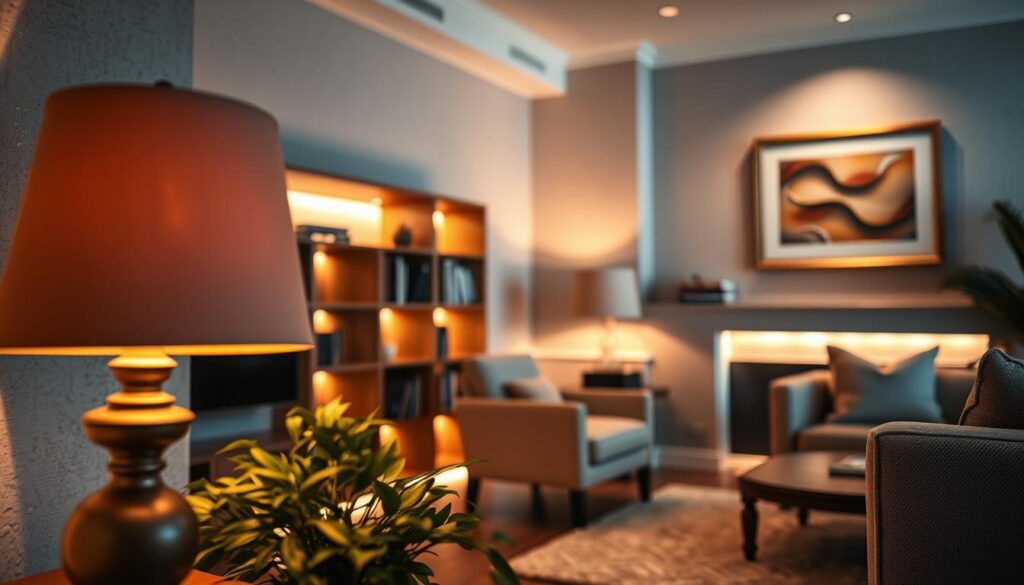
Room-by-Room Guide: Downlighting Applications
Downlighting makes rooms more functional and cozy. It’s great for different areas of the home. Knowing how to use it well can make your home more welcoming and useful.
Kitchens and Dining Areas
In kitchens, downlighting lights up countertops and cooking spots. Recessed lighting fixtures give a sleek, modern look. It also makes dining areas warm and inviting for meals and parties.
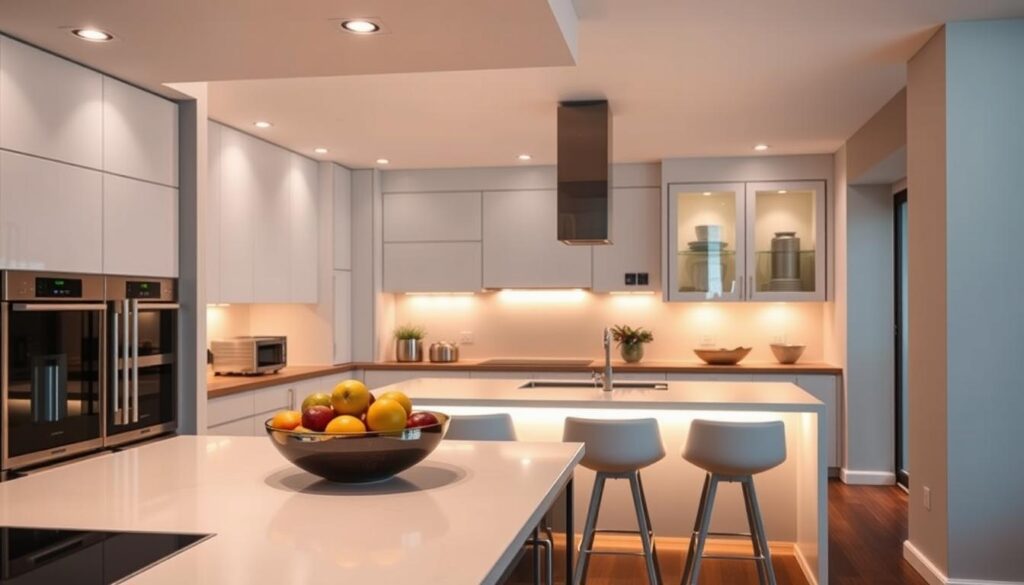
Bathrooms and Vanities
Downlighting in bathrooms is both useful and stylish. It shines a light on vanity areas, making grooming easier. It also adds to the spa feel, making the bathroom experience better.
LED downlights are great for bathrooms because they save energy and last long.
Home Offices and Workspaces
Downlighting in home offices helps with focused work. It reduces eye strain and boosts productivity. It directs light where it’s needed, which is key for computer work to avoid glare.
Room-by-Room Guide: Uplighting Applications
Uplighting can change how different rooms in your home look and feel. It makes spaces more inviting and relaxing. By using uplighting smartly, you can make each room special.
Living Rooms and Entertainment Spaces
In living rooms and entertainment areas, uplighting highlights special features and art. It makes the space warm and welcoming, great for gatherings. Uplighting can make a room feel cozier by focusing on its best parts.
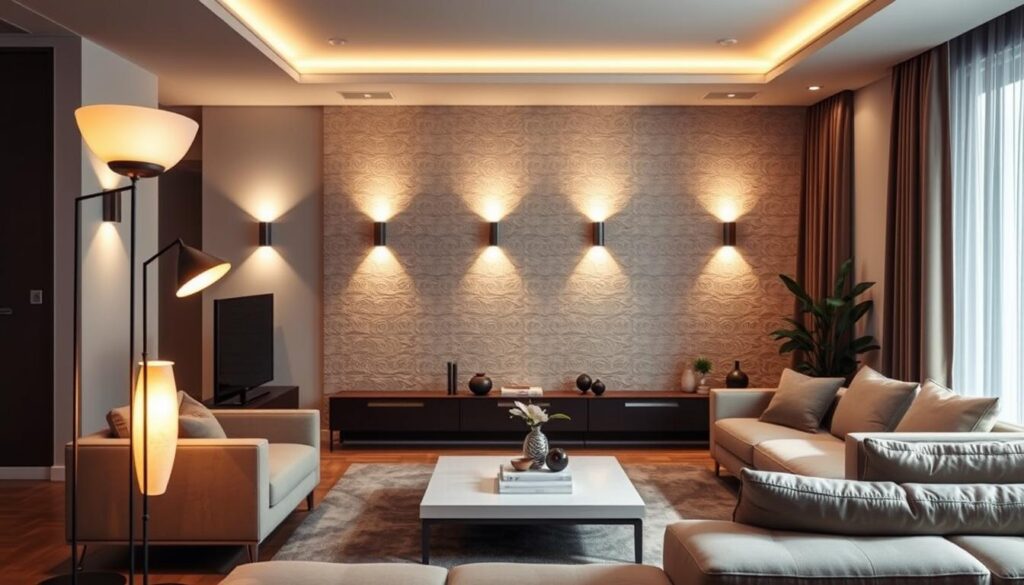
Hallways and Transitional Spaces
Hallways and transitional spaces get a grand look from uplighting. It lights up walls, columns, or staircases from below. This technique can turn a dull hallway into a stunning feature of your home.
Bedrooms and Relaxation Areas
In bedrooms and relaxation spots, uplighting helps create a calm and peaceful vibe. Soft uplighting adds a gentle glow, making the space cozy and intimate. It’s a smart way to create a peaceful ambiance for rest.
Knowing how to use uplighting helps in designing your lighting plan. Whether you want drama or coziness, uplighting is flexible. It can improve many areas of your home.
Outdoor Applications for Both Lighting Types
Downlighting and uplighting have special uses outdoors. They can make your home’s exterior look better. They also help with security and make your property more useful.
Landscape Lighting Strategies
Landscape lighting is key for outdoor design. Downlighting makes paths safe and welcoming. Uplighting brings out the beauty of trees and plants, adding depth to your garden.
Architectural Exterior Lighting
Architectural lighting highlights your home’s best parts. Uplighting shines on details like columns and arches. Downlighting creates a cozy glow on porches, making your home feel more inviting.
Security vs. Aesthetic Considerations
Outdoor lighting balances security and style. Security lighting uses bright, motion-sensitive lights to keep intruders away. But, you don’t have to give up on looks. By using downlighting and uplighting smartly, you can have a safe and beautiful outdoor area.
Technical Installation Considerations
Understanding the technical installation is key for a safe and effective lighting setup. Installing downlighting or uplighting fixtures is more than picking the right fixture. It requires knowing the technical details of the installation process.
Wiring Requirements and Challenges
The wiring for downlighting and uplighting installations can be complex. It’s important to make sure the wiring fits the chosen fixtures and follows local electrical codes. Challenges may arise if the wiring is old or if new wires need to go through finished ceilings or walls.
Ceiling Structure and Mounting Options
The type of ceiling you have can affect how you install lighting fixtures. There are different mounting options, like recessed for downlighting and surface for uplighting. Understanding your ceiling’s composition is key to picking the right mounting hardware and ensuring a secure installation.
Professional vs DIY Installation Realities
While DIY installation can save money, it’s not always the best choice for lighting.
“Hiring a professional ensures that the installation is done correctly and safely, potentially saving money in the long run by avoiding costly repairs.”
Professionals can handle complex wiring and mounting challenges, leading to a successful installation.
Energy Efficiency and Sustainability
As we aim for a greener future, the role of energy-saving lights is key. Downlighting and uplighting are vital in today’s lighting designs. They both affect how much energy we use.
Comparative Power Consumption
It’s important to look at how much power downlighting and uplighting use. Downlighting shines light on specific spots, which might cut down energy use. Uplighting adds ambiance but can use more energy if not controlled well.
| Lighting Type | Average Wattage | Energy Efficiency Rating |
|---|---|---|
| Downlighting | 9-12 Watts | High |
| Uplighting | 12-15 Watts | Medium to High |
LED Technology for Both Lighting Types
LED technology has changed the game for downlighting and uplighting. LEDs save a lot of energy and last longer than old lights.
Smart Controls for Optimization
Adding smart controls boosts energy efficiency in both lights. Smart systems adjust lighting based on who’s around, daylight, and what you’re doing. This saves energy.
Using LED tech and smart controls makes downlighting and uplighting more eco-friendly. This helps create a greener lighting design.
Budget Considerations: Downlighting vs Uplighting
When choosing lighting for your home, it’s key to think about the budget. Downlighting and uplighting each have their own costs. These costs can affect how much you spend on lighting.
Initial Purchase and Installation Costs
Downlighting and uplighting fixtures have different prices. Downlighting, like recessed lights, might cost more to install. This is because they need more work to set up. On the other hand, uplighting, like floor lamps, might be cheaper to buy but could need more electrical work. Think about these costs when choosing your lighting.
Long-term Operational Expenses
It’s also important to think about long-term costs. Downlighting often uses energy-efficient bulbs, saving money over time. Uplighting can also be energy-efficient, depending on the bulbs used. Remember to include the cost of replacing bulbs and energy use in your budget.
Value and Return on Investment
Looking at the value and return on investment (ROI) is also key. Downlighting makes spaces more functional, while uplighting adds beauty. Both can make your home more valuable. Lighting experts say a good lighting plan can greatly increase your home’s value.
By looking at initial costs, long-term expenses, and ROI, you can make smart lighting choices. This way, you can stay within your budget and get the look and function you want.
Creating Layered Lighting with Both Approaches
Creating a layered lighting system means combining downlighting and uplighting. This makes a room’s ambiance and function better. It also makes the lighting design more flexible and adaptable.
The Three-Layer Lighting Method
The three-layer lighting method is key to good layered lighting. It divides lighting into three parts: ambient, task, and accent.
- Ambient lighting lights up the whole room.
- Task lighting shines on areas where you do tasks.
- Accent lighting highlights special features or adds interest.
Balancing Ambient, Task, and Accent Lighting
It’s important to balance these three layers for a good lighting design. Ambient lighting sets the mood. Task lighting makes sure you can do things. Accent lighting adds beauty and depth. Adjusting each layer’s intensity and direction creates a welcoming space.
Control Systems for Multiple Light Sources
To make a layered lighting system work well, you need a good control system. This could be dimmer switches, smart lighting, or scene-setting systems. These tools let you change the lighting for different times and activities. This makes your lighting design more useful and efficient.
Selecting the Right Fixtures for Your Space
Choosing the right lighting fixtures is about more than just picking something pretty. You need to think about design style and size. It’s important to match your fixtures with your décor and the look you want.
Matching Fixtures to Design Style
Your lighting should fit your space’s style. Modern places look great with sleek, simple lights. Traditional spaces might need more detailed designs. Think about the materials, colors, and shapes in your room to choose wisely.
Size and Scale Considerations
The size of your lights is key for a balanced look. Big rooms can handle big lights, but small rooms need smaller ones. Also, think about how the lights compare to your furniture and other room elements.
| Room Size | Fixture Size | Recommended Style |
|---|---|---|
| Small | Compact | Minimalist |
| Medium | Medium | Versatile |
| Large | Large | Statement Pieces |
By keeping these points in mind, you can find lights that light up your space well. They’ll also make it look better and work better.
How to Choose Between Downlighting and Uplighting
Choosing the right lighting is key. You need to think about your space’s needs. This means looking at the room’s purpose, its design, and the mood you want to create.
Assessing Your Space Requirements
First, think about what you’ll do in the room. Then, decide on the lighting that will help with these activities.
- Identify the room’s primary function
- Consider the room’s architectural features
- Determine the desired ambiance
For example, kitchens and home offices need downlighting for tasks. But, living rooms and bedrooms might do better with uplighting for a cozy feel.
Decision Framework for Lighting Projects
Use a decision framework to guide your lighting choices. Think about the room’s size, color, and furniture.
- Evaluate the room’s dimensions and layout
- Consider the color scheme and furniture
- Choose lighting that complements the space
By considering these points, you can pick lighting that improves both function and beauty in your space.
Conclusion
Downlighting and uplighting are two lighting styles that change how a room feels and works. Knowing their differences helps make spaces more welcoming and useful.
This guide has shown how downlighting and uplighting work. It helps you choose the right lighting for your home or business.
When picking between downlighting and uplighting, think about what your space needs. Consider the mood you want, the tasks you’ll do, and your room’s design. This way, you can use these lighting styles to make your space better.
In short, a good lighting plan can make any space look and feel better. This guide has given you the tools to create a space that’s both beautiful and functional.